

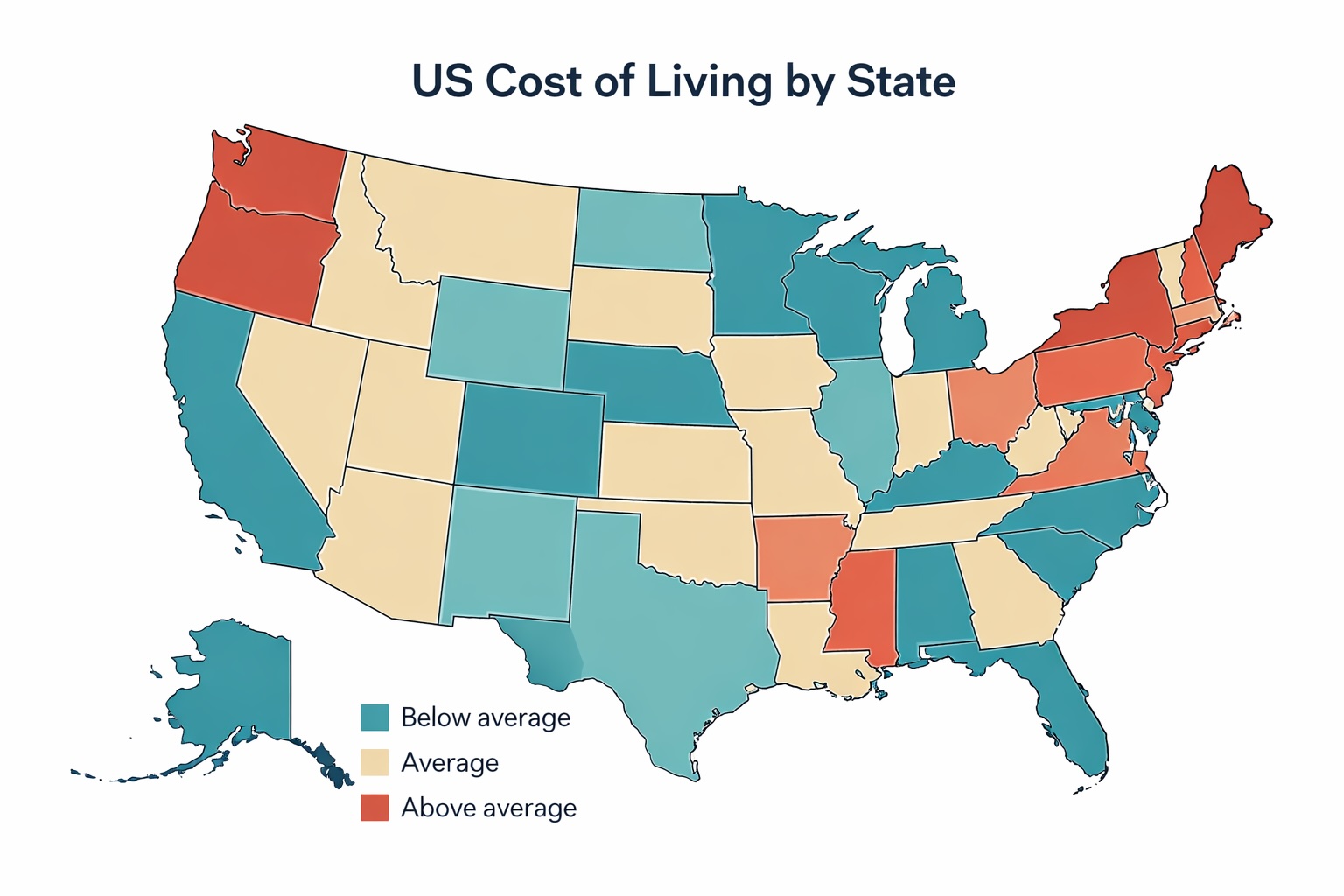
The cost of living varies widely across the United States. Housing prices, transportation expenses, food costs, and utilities can differ significantly depending on where you live.
For people considering relocation or planning a new job opportunity, understanding the cost of living comparison between cities and states is essential for making informed financial decisions.
A higher salary in one city does not always mean a higher standard of living if everyday expenses are also higher.
This guide explores the cost of living comparison in the U.S., including housing costs, transportation, utilities, and other essential living expenses.
What Is a Cost of Living Comparison?
A cost of living comparison measures how much it costs to maintain a certain lifestyle in different locations.
Cost of living calculations typically include expenses such as:
- housing
- transportation
- groceries
- healthcare
- utilities
- taxes
Comparing these expenses allows people to understand how far their income will go in different cities.
Average Cost of Living in the United States
The average household in the United States spends roughly $6,000 to $7,000 per month on living expenses depending on location and household size.
Typical monthly expenses include:
| Expense Category | Average Monthly Cost |
|---|---|
| Housing | $1,800 – $2,800 |
| Transportation | $600 – $1,000 |
| Food and groceries | $500 – $900 |
| Utilities | $200 – $400 |
| Healthcare | $300 – $700 |
Housing is usually the largest component of the cost of living.
Cost of Living Comparison by State
Living expenses vary dramatically depending on the state.
| State | Cost of Living Index |
|---|---|
| California | 140 |
| New York | 135 |
| Texas | 95 |
| Florida | 102 |
| Mississippi | 85 |
States such as California and New York tend to have the highest living costs, while states in the Midwest and South are typically more affordable.
Housing Costs Across the U.S.
Housing is often the biggest factor affecting cost of living differences.
| City | Average Home Price |
|---|---|
| San Francisco | $1,200,000+ |
| New York | $750,000 |
| Austin | $450,000 |
| Chicago | $350,000 |
| Cleveland | $220,000 |
High housing costs significantly increase the cost of living in major metropolitan areas.
You can explore construction costs in our guide to the
average cost per square foot to build a house
Transportation Costs in Different Cities
Transportation expenses also vary widely depending on commuting patterns and fuel prices.
Typical monthly transportation costs:
| Transportation Type | Average Monthly Cost |
|---|---|
| Public transportation | $80 – $200 |
| Car ownership | $600 – $1,000 |
You can learn more about vehicle expenses in our guide to the
average car payment per month
Utility Costs and Cost of Living
Utilities such as electricity, water, and heating are another important part of the cost of living.
Average monthly utility costs:
| Utility | Average Monthly Cost |
|---|---|
| Electricity | $120 – $180 |
| Gas | $60 – $120 |
| Water | $40 – $70 |
You can explore these expenses in our guide to the
average utility costs in the U.S.
Food and Grocery Costs
Food costs can vary depending on location, household size, and eating habits.
Typical grocery expenses:
| Household Size | Average Monthly Grocery Cost |
|---|---|
| Single adult | $300 – $450 |
| Couple | $600 – $800 |
| Family of four | $900 – $1,200 |
Eating out frequently can significantly increase food expenses.
Cities With the Highest Cost of Living
Some American cities are known for their extremely high living costs.
Cities with high living expenses include:
- San Francisco
- New York
- Los Angeles
- Boston
- Seattle
Housing prices are usually the main driver of high costs in these cities.
Cities With the Lowest Cost of Living
Some cities offer significantly lower living expenses.
Examples include:
- Oklahoma City
- Memphis
- Wichita
- Tulsa
- Birmingham
Lower housing prices make these cities more affordable for many households.
Why Cost of Living Matters
Cost of living comparisons help people make better financial decisions when:
- accepting a new job
- relocating to another city
- planning retirement
- choosing where to buy a home
Understanding these costs helps households maintain financial stability.
FAQ
What is a cost of living comparison?
A cost of living comparison evaluates how much it costs to maintain a similar lifestyle in different cities or regions.
What is the biggest cost of living expense?
Housing is usually the largest expense for most households.
Which states have the highest cost of living?
States such as California, New York, and Hawaii tend to have the highest living costs.
Which states have the lowest cost of living?
States in the Midwest and South often have the lowest living expenses.
Why does the cost of living vary so much?
Differences in housing prices, wages, taxes, and transportation costs all affect the cost of living.
Conclusion
The cost of living in the United States varies significantly depending on location. Housing, transportation, utilities, and food costs all play a major role in determining how expensive it is to live in a particular city or state.
By comparing living expenses across different locations, individuals and families can make informed decisions about where to live and how to manage their financial resources.