
Natural gas is one of the most common energy sources used by households in the United States. Millions of homes rely on natural gas for heating, cooking, and water heating.
However, the amount households pay for natural gas varies widely across the country. Climate, energy supply, and regional infrastructure all influence the final cost of a household’s gas bill.
Understanding the average natural gas bill by state in the U.S. helps homeowners and renters compare energy costs and better estimate their monthly utility expenses.
In this guide, we break down average gas bills across the country and explain why prices differ between states.
Average Natural Gas Bill in the United States
The typical American household spends between:
$80 and $120 per month on natural gas
However, this cost can change dramatically during the winter months when heating demand increases.
Natural gas expenses are part of the broader average utility costs in the U.S., which include electricity, water, and waste services.
Average Natural Gas Bill by State
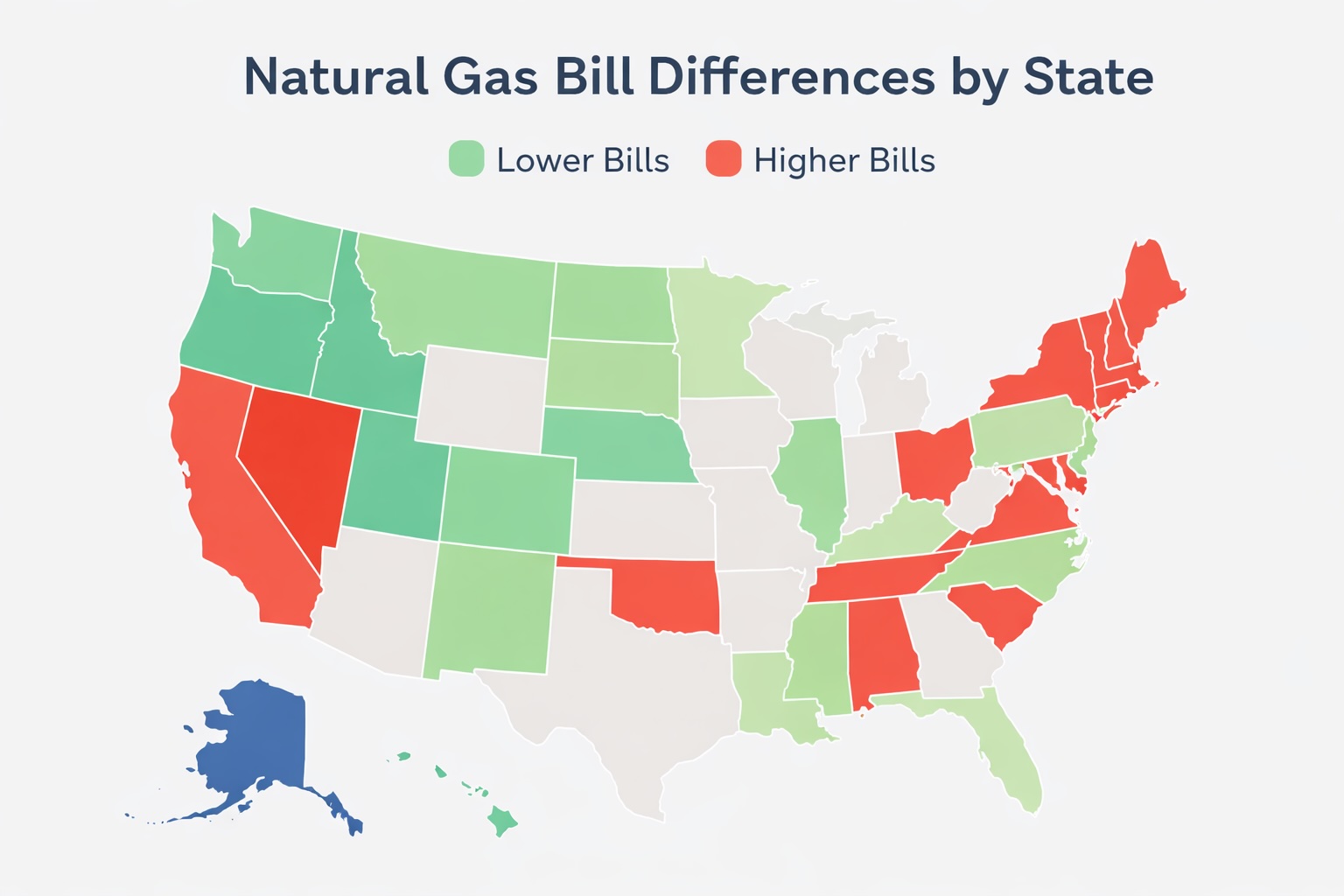
Gas prices and consumption vary significantly across states due to climate differences and regional energy markets.
| State | Average Monthly Gas Bill |
|---|---|
| California | $90 |
| Texas | $95 |
| Illinois | $110 |
| Michigan | $115 |
| New York | $105 |
| Pennsylvania | $100 |
| Ohio | $98 |
| Georgia | $85 |
| Washington | $80 |
| Florida | $60 |
States with colder winters typically have higher natural gas consumption because households rely heavily on gas heating systems.
Why Natural Gas Costs Vary by State
Several factors influence natural gas prices across the United States.
Climate
Colder states use significantly more natural gas for heating during winter months.
Local Energy Supply
States located near major natural gas production areas may benefit from lower energy prices.
Infrastructure and Distribution
Transportation and pipeline infrastructure can affect how efficiently natural gas reaches households.
Natural Gas Usage in American Homes
Natural gas is used for several household functions.
Common uses include:
- home heating
- water heating
- cooking
- clothes drying
Heating typically represents the largest portion of natural gas consumption.
You can also compare natural gas costs with other household energy expenses such as the electricity cost per month in the U.S.
Natural Gas Cost in Winter vs Summer
Seasonal changes have a major impact on gas bills.
During winter months, gas bills can increase significantly because heating systems run more frequently.
Typical seasonal gas bills:
| Season | Average Monthly Bill |
|---|---|
| Summer | $30 – $60 |
| Winter | $120 – $200 |
Homes in northern states may see even higher winter heating costs.
How Natural Gas Fits Into Household Budgets
Energy costs are an important part of the typical household budget.
In addition to gas bills, American households must pay for housing, transportation, food, and insurance.
To see how these expenses compare, check out our guide to the average monthly household budget in the U.S.
Ways to Reduce Natural Gas Bills
Households can reduce gas consumption through several strategies.
Improve home insulation.
Use programmable thermostats.
Seal air leaks around windows and doors.
Maintain heating systems regularly.
These changes can significantly reduce heating costs during winter.
FAQ
What is the average natural gas bill in the U.S.?
The average natural gas in the United States typically ranges between $80 and $120 per month, depending on location and energy usage.
Which states have the highest natural gas bills?
Colder states such as Michigan, Illinois, and New York often have higher gas bills because households rely more heavily on heating.
Why do natural gas bills increase in winter?
Natural gas is commonly used for home heating, which leads to higher energy consumption during colder months.
Is natural gas cheaper than electricity for heating?
In many regions of the United States, natural gas heating is generally cheaper than electric heating.
How can I reduce my natural gas bill?
Improving insulation, sealing air leaks, and using efficient thermostats can help reduce natural gas consumption.
Conclusion
Natural gas remains one of the most important household energy sources in the United States. While the average monthly gas bill ranges between $80 and $120, costs vary widely depending on climate, energy supply, and household consumption.
Understanding natural gas costs by state can help homeowners and renters better estimate their energy expenses and plan their budgets accordingly.