
Many people assume ceiling fans directly lower electricity bills.
But fans don’t cool air.
They move it.
So do they actually reduce your bill — or is that just a myth?
Let’s break it down.
Quick Answer
A ceiling fan alone does NOT lower your electric bill.
But it can reduce your bill indirectly by allowing you to raise your thermostat.
And that difference matters.
How Ceiling Fans Work
Fans create a wind-chill effect.
Air movement increases evaporation from your skin.
You feel 3–5°F cooler — even though the room temperature stays the same.
How Much Does It Cost to Run a Ceiling Fan?
The Real Savings Mechanism
If a ceiling fan allows you to:
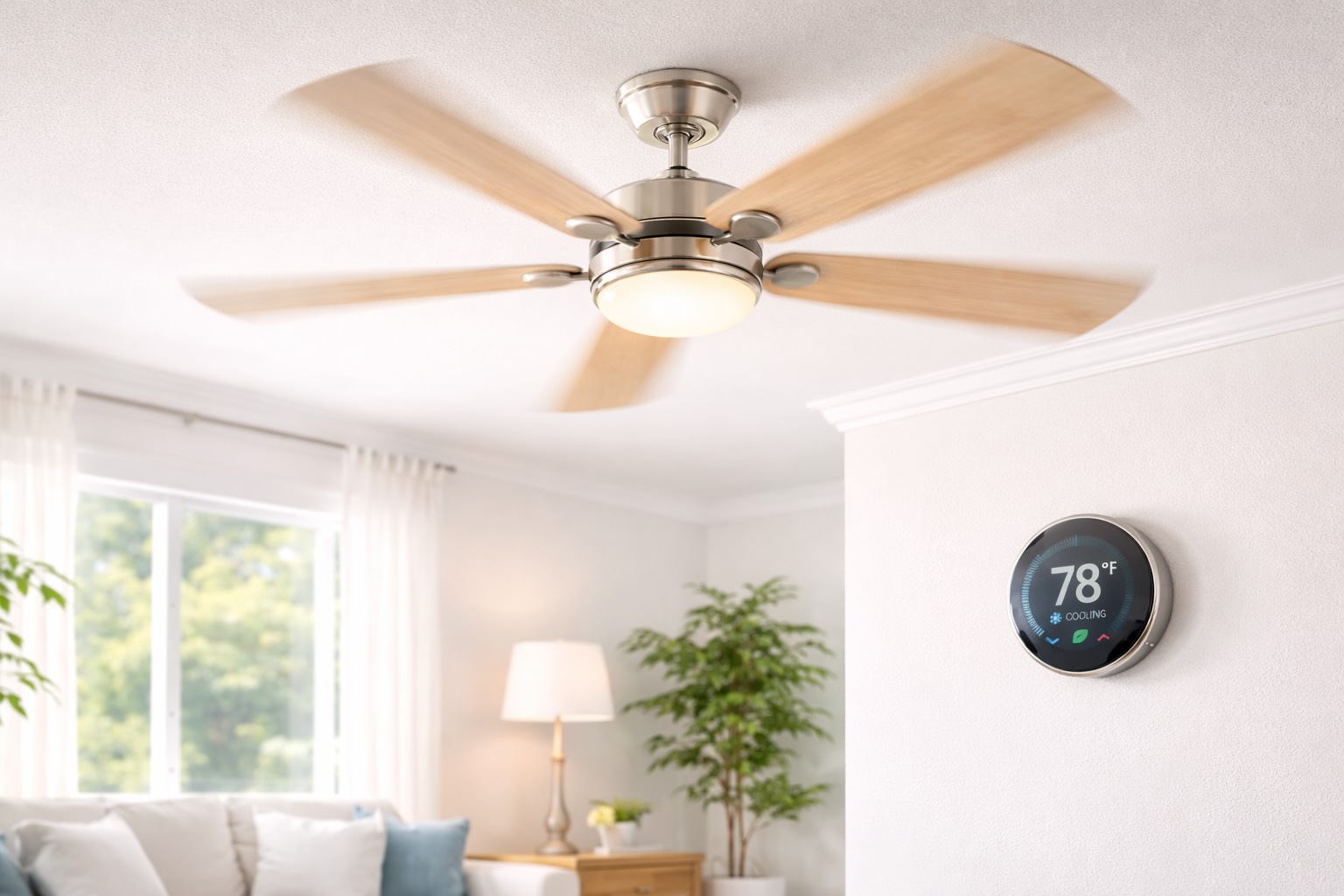
Raise thermostat from 72°F to 78°F
You reduce AC energy use by:
3–5% per degree
That’s roughly 15–20% savings.
Example Calculation
Summer electric bill with AC at 72°F:
$220/month
Raise to 78°F:
Save ~18%
New bill ≈ $180/month
Savings = $40
Fan cost to run:
$3–$5 per month
Net savings = ~$35/month
That’s real.
📊 Comparison Table
| Scenario | Monthly Cost |
|---|---|
| AC at 72°F | $220 |
| AC at 78°F | $180 |
| Fan cost | $4 |
| Total with fan | $184 |
Still $36 cheaper.
When Fans Do NOT Save Money
If:
• AC temperature stays the same
• Fan runs in empty rooms
• Windows are open while AC runs
Then no savings.
Fans cool people, not rooms.
Turn them off when leaving.
Ceiling Fans in Winter
Reverse blade direction.
Push warm air down.
Reduce heating demand slightly.
Small savings, but real.
FAQ
Do ceiling fans reduce electricity usage?
Indirectly, yes — by reducing AC runtime.
Should I leave fan on all day?
No. Only when someone is in the room.
Is it cheaper to use a fan instead of AC?
Yes, but only for mild heat. Fans don’t lower room temperature.
Do large fans cost more?
Slightly, but still minimal compared to AC.
Final Thoughts
Ceiling fans don’t magically lower your electric bill.
But when used strategically, they allow higher thermostat settings — and that’s where the real savings happen.
They are one of the cheapest tools to reduce summer energy costs.