
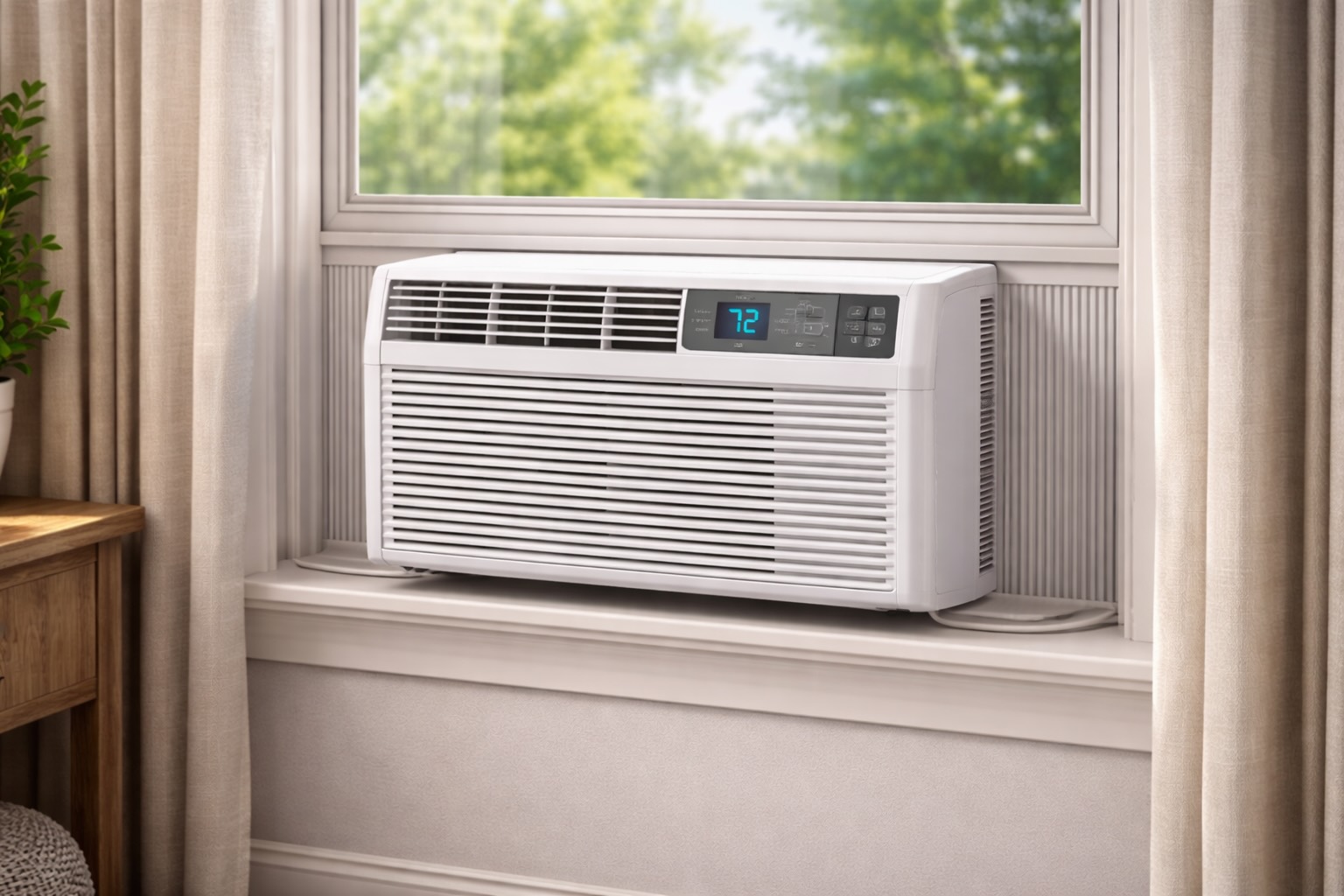
Window air conditioners are one of the most common cooling solutions in apartments and small homes.
They’re usually more efficient than portable units — but how much do they actually cost to run?
Let’s break down the real electricity cost per hour, per day, and per month.
Quick Answer
Most window AC units use:
• 500 – 1,400 watts
• 5,000 – 12,000 BTU
At $0.16 per kWh:
1,000W unit = 1 kWh
👉 $0.16 per hour
That means:
• $1.28 for 8 hours
• $38–$55 per month (8h/day)
Average Electricity Cost per kWh by State (2026 U.S. Data)
Window AC Cost by Size
| BTU | Watts | Cost Per Hour | 30 Days (8h/day) |
|---|---|---|---|
| 5,000 | 500W | $0.08 | $19 |
| 8,000 | 800W | $0.13 | $31 |
| 10,000 | 1,000W | $0.16 | $38 |
| 12,000 | 1,400W | $0.22 | $53 |
Higher BTU = higher electricity cost.
Monthly Example
Running 10 hours daily:
1,000W × 10h = 10 kWh
10 × $0.16 = $1.60 per day
$1.60 × 30 = $48 per month
Two rooms? Double it.
Window AC vs Portable AC
Window units are typically:
• 10–20% more efficient
• Better sealed
• Lower air leakage
How Much Does It Cost to Run a Portable Air Conditioner?
Portable units are convenient but slightly less efficient due to hose venting design.
Window AC vs Central Air
Central systems:
• 3,000–5,000 watts
• Cool entire home
(Internal link → Cost to Run Central Air Conditioning)
Window AC is cheaper for cooling one room only.
Does Energy Star Matter?
Yes.
Energy Star models use:
• 10–15% less electricity
• Better compressor cycling
Savings can reach $30–$50 per summer.
FAQ
Is a window AC cheaper than portable AC?
Yes, usually 10–20% cheaper to run.
How much does it cost per day?
$1–$3 depending on runtime and BTU.
Is it expensive to run all summer?
It can add $100–$300 to seasonal electricity bills depending on usage.
What size AC should I choose?
Match BTU to room size to avoid energy waste.
Final Thoughts
Window air conditioners are one of the most efficient single-room cooling solutions.
They consume significant electricity but are cheaper than cooling an entire home with central air.
Understanding wattage and runtime is key to controlling summer utility costs.