
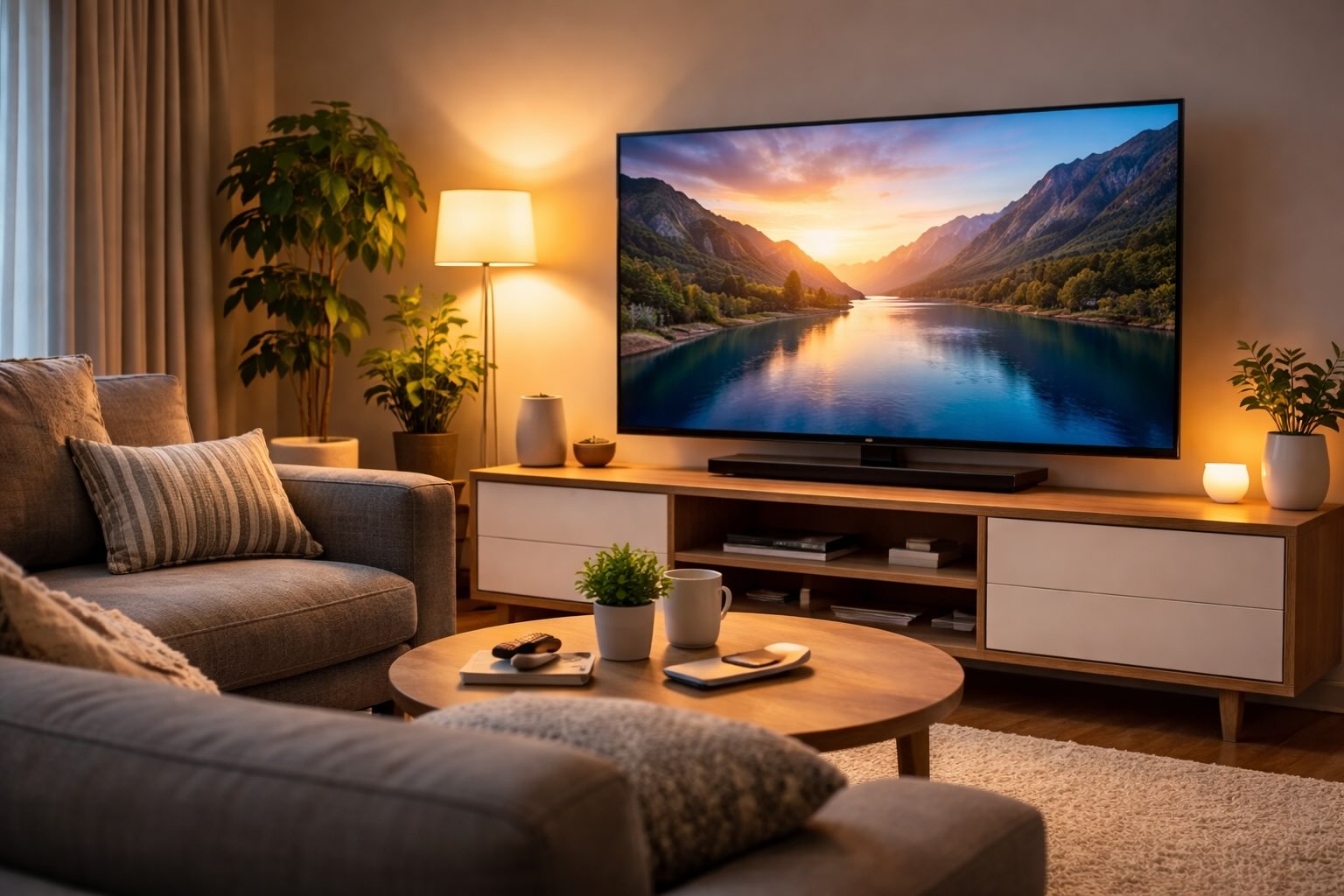
Streaming is part of everyday life.
But how much does it actually cost to run a TV for several hours per day?
Let’s break down the real electricity cost per hour, per day, and per year.
Quick Answer
Most modern TVs use:
• 30–100 watts (LED)
• 100–200 watts (OLED / large screens)
• 200–400 watts (old plasma TVs)
At $0.16 per kWh:
A 100-watt TV costs:
0.1 kWh × $0.16 = $0.016 per hour
👉 Around 1–3 cents per hour
Average Electricity Cost per kWh by State (2026 U.S. Data)
TV Electricity Cost by Type
| TV Type | Watts | Cost Per Hour | Cost Per Year (4h/day) |
|---|---|---|---|
| LED 43” | 50W | $0.008 | $11–15 |
| LED 65” | 100W | $0.016 | $20–25 |
| OLED 65” | 150W | $0.024 | $30–35 |
| Plasma (old) | 300W | $0.048 | $60–70 |
Modern TVs are surprisingly cheap to run.
Cost Per Day
If you watch 4 hours per day:
100W TV:
4 × $0.016 = $0.06 per day
That’s about $2 per month.
Cost Per Year
4 hours daily:
4h × 365 = 1,460 hours
1,460 × $0.016 ≈ $23 per year
Even heavy TV use rarely exceeds $40 annually.
Does Screen Size Matter?
Yes.
Larger screens use more electricity.
75” TVs can consume 120–200W depending on technology.
But even then, cost remains modest compared to:
• Air conditioners
• Electric heaters
• Dryers
Cost to Run a Space Heater Per Month (Electric Heater Guide 2026)
Standby Power (Phantom Load)
TVs use 0.5–3 watts in standby mode.
Cost per year:
Around $1–3 annually.
Not dramatic, but power strips can eliminate it.
FAQ
Is leaving the TV on expensive?
No. Modern TVs cost only a few cents per hour.
Do smart TVs use more electricity?
Not significantly. Streaming apps add minimal power usage.
Is OLED more expensive to run?
Slightly. OLED TVs use more power than LED models.
What appliance uses more electricity than a TV?
Air conditioners, dryers, ovens, and space heaters use far more power.
Final Thoughts
Compared to heating or cooling systems, TVs are minor contributors to electricity bills.
Understanding wattage helps you identify which appliances truly drive your utility costs.