
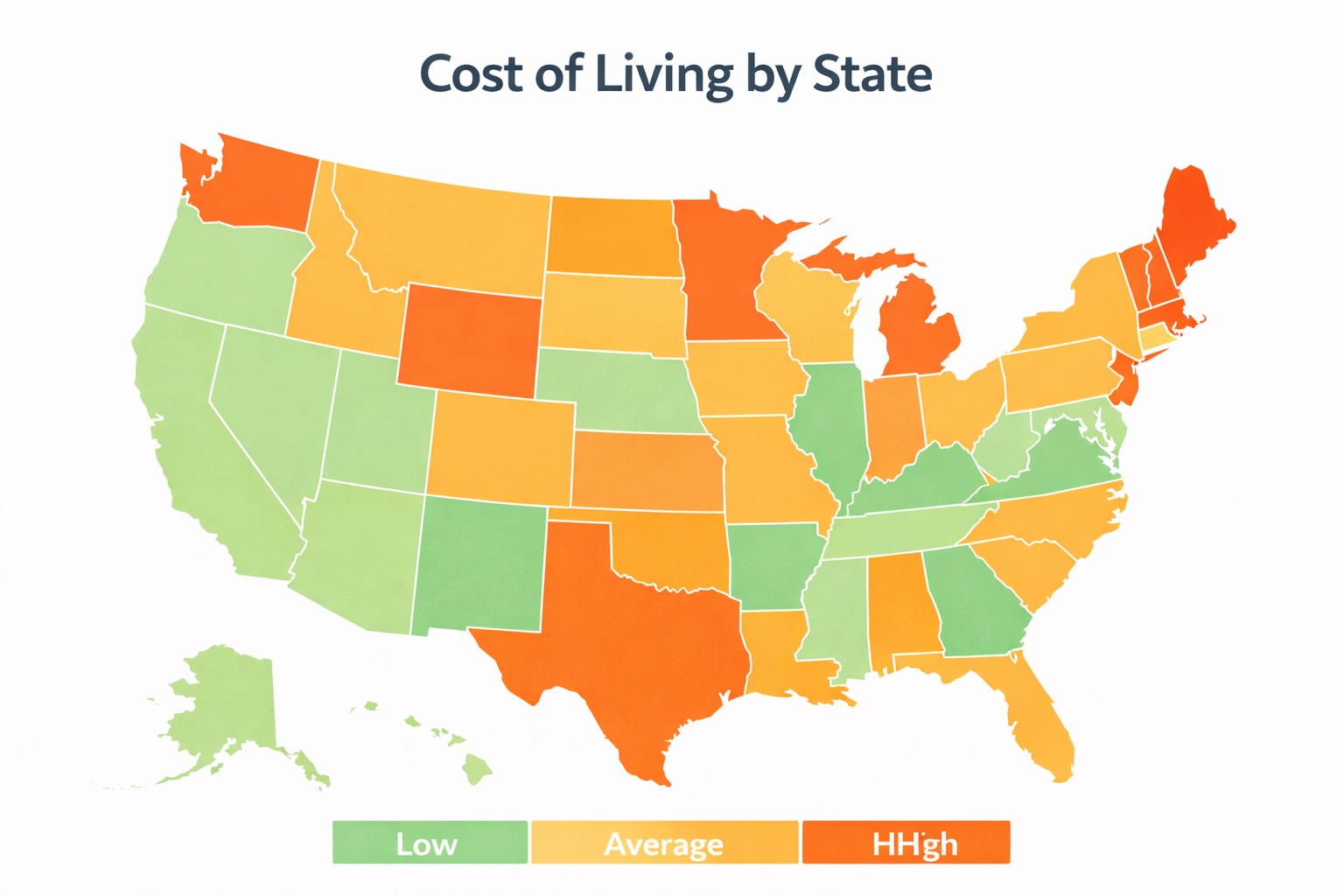
The cost of living varies dramatically across the United States. While some states offer relatively affordable housing, groceries, and utilities, others rank among the most expensive places to live in the world.
Understanding the cost of living by state helps families, workers, and retirees make better decisions about where to live.
In this guide, we compare the average cost of living across U.S. states in 2026, including housing, groceries, utilities, and transportation.
What Is the Cost of Living?
The cost of living refers to the total amount of money required to maintain a certain lifestyle in a specific location.
Typical cost-of-living calculations include:
| Expense Category | Example Costs |
|---|---|
| Housing | Rent or mortgage |
| Groceries | Food and household items |
| Utilities | Electricity, water, internet |
| Transportation | Car payments, gas, insurance |
| Healthcare | Insurance and medical costs |
Housing usually represents the largest portion of the cost of living.
Related articles:
- Average Rent in the U.S. Per Month
- Average Grocery Bill for a Family of 4
- Average Utility Costs in the U.S.
Most Expensive States to Live In
Some states consistently rank among the most expensive due to high housing costs and strong economies.
| State | Cost of Living Index |
|---|---|
| Hawaii | Very High |
| California | Very High |
| New York | Very High |
| Massachusetts | High |
| Washington | High |
For example, housing costs in Hawaii and California are often more than double the national average.
Most Affordable States to Live In
Some states offer significantly lower living costs.
| State | Cost of Living Index |
|---|---|
| Mississippi | Very Low |
| Oklahoma | Low |
| Arkansas | Low |
| Kansas | Low |
| Alabama | Low |
These states often have lower housing prices and cheaper everyday expenses.
Average Monthly Cost of Living by State (Example)
Below is an approximate monthly cost for a typical household.
| State | Average Monthly Cost |
|---|---|
| California | $4,000 – $5,500 |
| New York | $3,800 – $5,200 |
| Texas | $2,800 – $3,900 |
| Florida | $3,000 – $4,200 |
| Ohio | $2,500 – $3,400 |
Costs vary widely depending on city size and lifestyle.
Housing and Cost of Living
Housing costs usually drive most differences between states.
| State | Average Monthly Rent |
|---|---|
| California | $2,500+ |
| New York | $2,400+ |
| Texas | $1,500 |
| Ohio | $1,200 |
Related guide:
Average Rent in the U.S. Per Month
Groceries and Everyday Expenses
Food prices also vary across states.
| State | Monthly Grocery Cost |
|---|---|
| California | $1,200 |
| Florida | $1,050 |
| Texas | $1,000 |
| Midwest states | $900 |
Related guide:
Average Grocery Bill for a Family of 4
Utilities and Energy Costs
Utility costs can depend heavily on climate.
Hot states tend to spend more on air conditioning, while colder regions may have higher heating bills.
Typical monthly utilities:
| Utility | Monthly Cost |
|---|---|
| Electricity | $120 |
| Water | $70 |
| Internet | $70 |
Related article:
Average Utility Costs in the U.S.
Factors That Affect Cost of Living
Several factors influence living costs across states.
Housing demand
Cities with strong job markets usually have higher housing prices.
Taxes
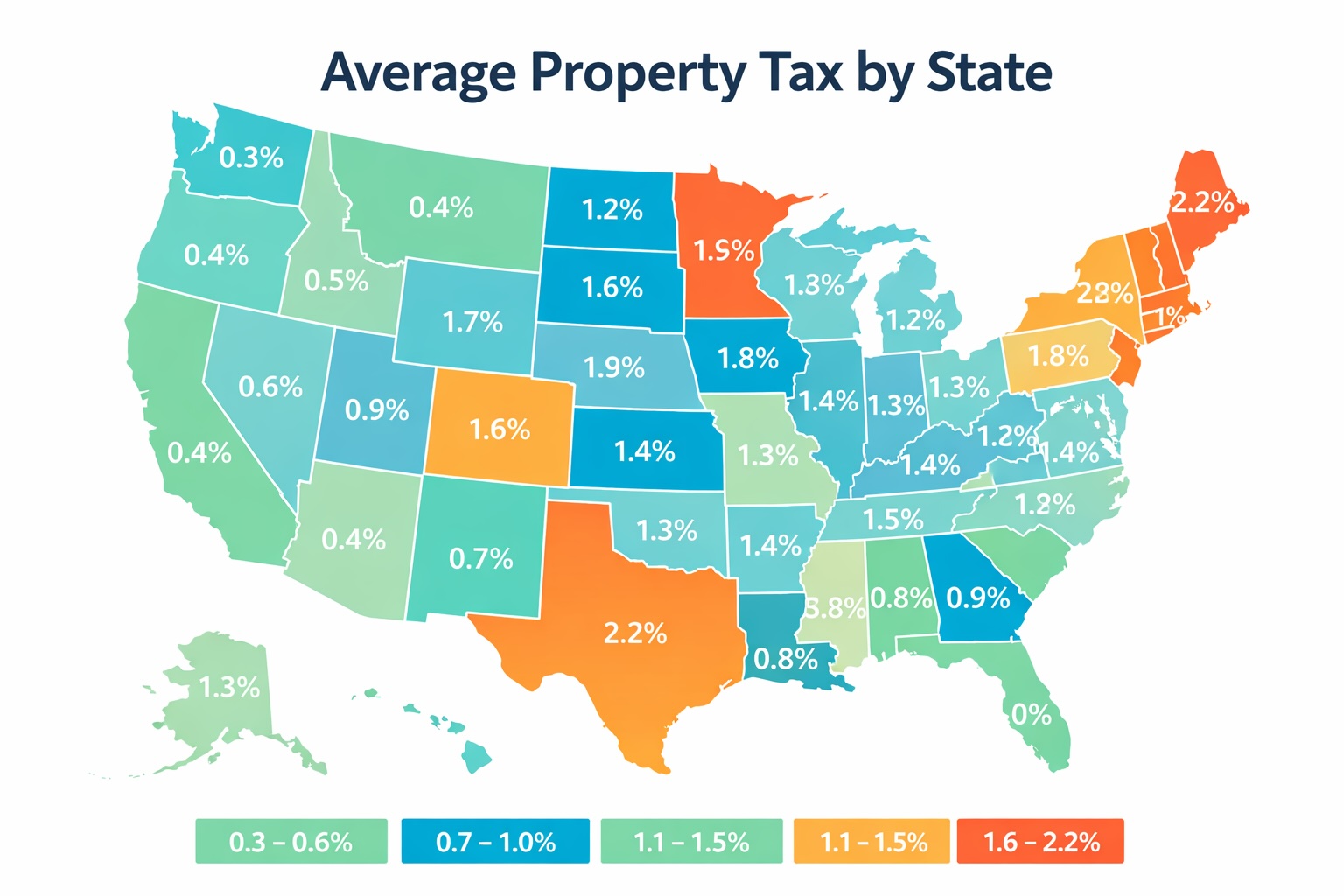
Income tax, property tax, and sales tax vary widely.
Climate
Energy costs depend heavily on heating or cooling needs.
Population growth
States experiencing rapid population growth often see rising living costs.
FAQ
Which state has the highest cost of living?
Hawaii consistently ranks as the most expensive state due to housing and import costs.
Which state has the lowest cost of living?
Mississippi and Oklahoma are often among the most affordable states.
Why does the cost of living vary so much?
Housing prices, taxes, wages, and local economies all influence living costs.
Is the cost of living higher in big cities?
Yes. Large cities typically have significantly higher housing and transportation costs.
Conclusion
The cost of living varies widely across the United States. While coastal states often have higher living expenses, many Midwestern and Southern states offer much more affordable lifestyles.
Comparing costs across states helps families make smarter financial and relocation decisions.