
Setting your AC just a few degrees lower can significantly increase your electricity bill.
But what temperature actually saves money without making your home uncomfortable?
Let’s break down the optimal thermostat settings for cost efficiency.
Quick Answer
The U.S. Department of Energy recommends:
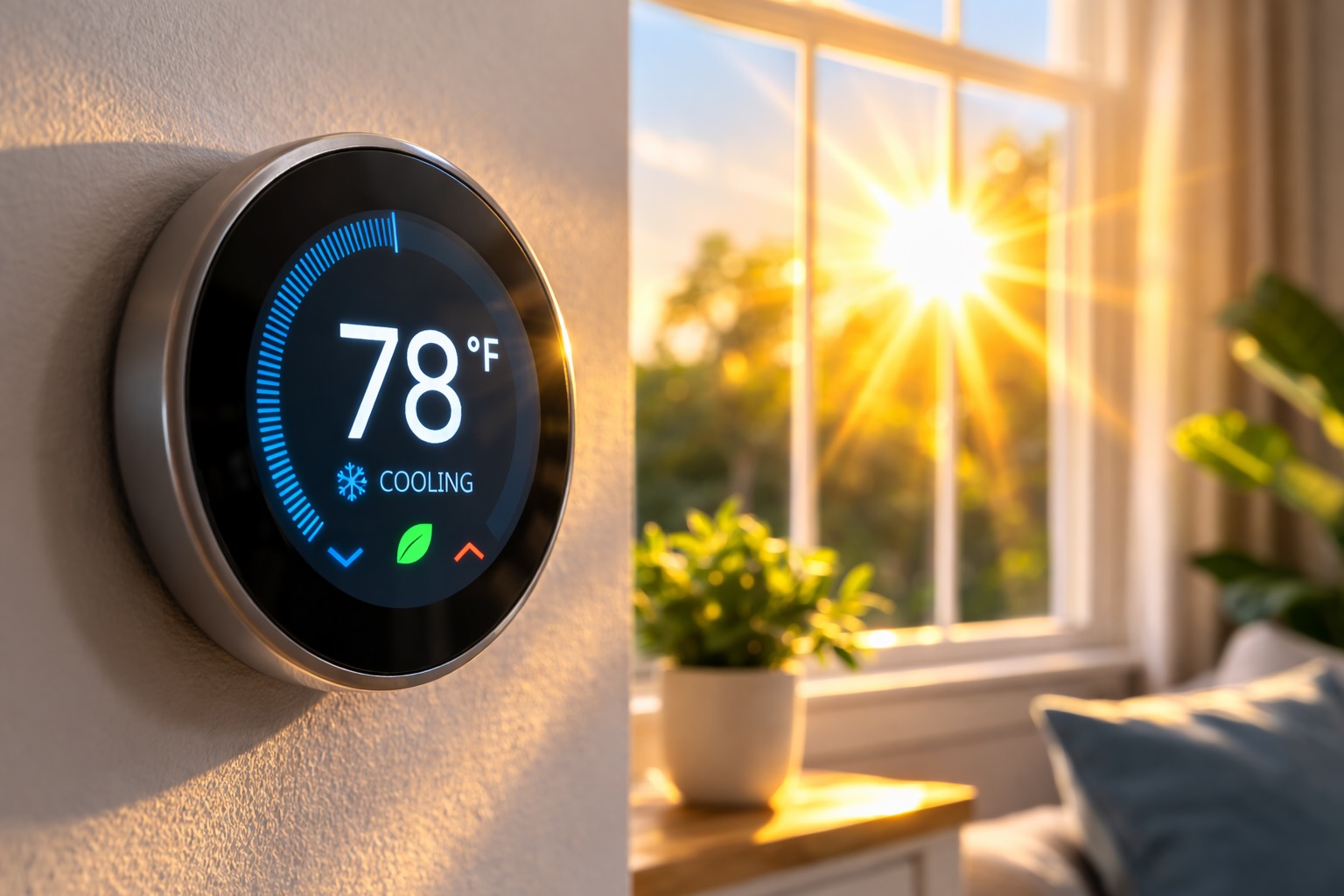
👉 78°F (26°C) when you’re home in summer
For every degree you lower below 78°F, energy use increases by about 3–5%.
How Temperature Affects Cost
Example:
If your AC costs $200/month at 72°F
Raising it to 78°F can reduce costs by 10–20%
That’s $20–$40 saved monthly.
Is It Cheaper to Leave the AC On All Day?
Recommended Settings
| Situation | Recommended Temp |
|---|---|
| Home daytime | 78°F |
| Sleeping | 74–76°F |
| Away | 82–85°F |
Small adjustments = measurable savings.
Why 78°F?
Because cooling requires energy proportional to:
• Indoor vs outdoor temperature difference
• Runtime duration
• Home insulation
The greater the difference, the harder the AC works.
Thermodynamics again. No marketing trick.
What If 78°F Feels Too Warm?
Use:
• Ceiling fans (feel 4°F cooler)
• Blackout curtains
• Dehumidifier (humidity impacts comfort)
How Much Does It Cost to Run a Ceiling Fan?
How Much Does It Cost to Run a Dehumidifier?
How Much Can You Save?
Raising thermostat 6 degrees:
6 × 4% average savings ≈ 24%
If your summer bill is $250/month
You could save ~$60/month.
Over 4 months: $240.
That’s not trivial.
📊 Temperature vs Cost Impact
| Thermostat Setting | Estimated Cost Impact |
|---|---|
| 72°F | Highest cost |
| 75°F | Moderate |
| 78°F | Optimal balance |
| 82°F | Maximum savings |
FAQ
Is 78°F really comfortable?
For many homes, yes — especially with fans.
Does lowering AC at night save money?
Yes, because outside temperatures drop.
Does humidity affect comfort?
Absolutely. Lower humidity makes higher temps feel cooler.
Is 72°F expensive?
Yes. It significantly increases runtime and cost.
Final Thoughts
There is no magic temperature.
But 78°F is the sweet spot between comfort and energy savings.
Every degree lower increases cost.
Every hour longer increases cost.
Control the temperature, control the bill.