
Water is an essential household utility — but its cost can vary dramatically depending on where you live. From drought-prone states to regions with abundant water supply, pricing structures differ across the country.
So how much is the average water bill in the United States?
Here’s a full breakdown.
Quick Answer: What Is the Average Water Bill in the U.S.?
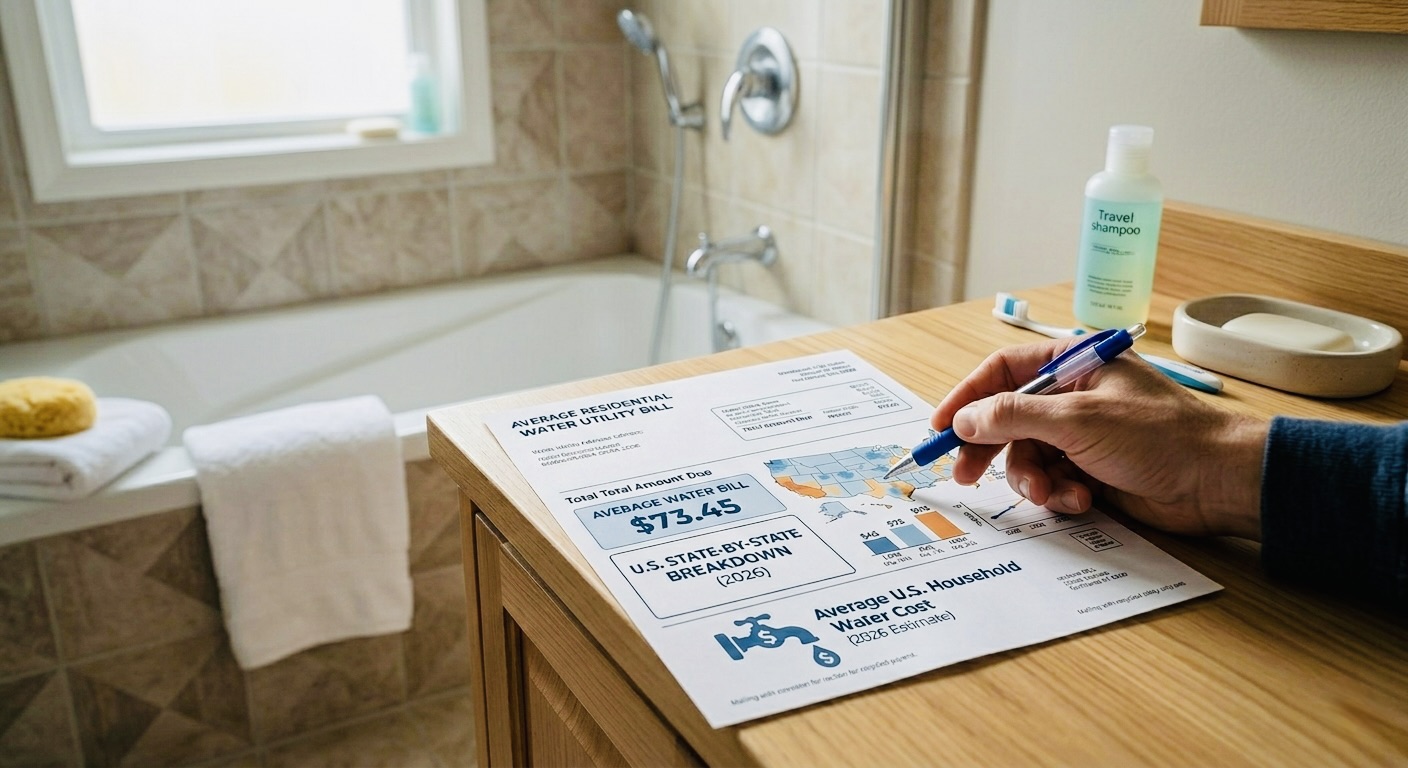
The average water bill in the U.S. ranges between $40 and $70 per month for a typical household.
In some states, bills may fall below $30 per month. In others, especially areas facing water scarcity, costs can exceed $100 per month.
Most water bills also include sewer services, which can account for 40–60% of the total charge.
What Does a Water Bill Include?
Your monthly bill typically includes:
- Water usage (measured in gallons or cubic feet)
- Sewer services
- Infrastructure fees
- Stormwater fees (in some cities)
Municipalities set pricing based on infrastructure costs, local supply, and environmental regulations.
Average Water Bill by State (Estimated Ranges)
While rates fluctuate by city, here are general state-level averages:
Lower average bills:
- Wisconsin
- Minnesota
- Missouri
- Utah
Higher average bills:
- California
- Texas
- Florida
- Nevada
Drought conditions and infrastructure investments significantly impact pricing in higher-cost states.
How Water Usage Impacts Your Bill
The average American household uses about 3,000–4,000 gallons of water per month.
Your total cost depends on:
- Household size
- Lawn irrigation
- Pool ownership
- Washing machine frequency
- Leak detection
Lawn watering in summer can double water consumption.
Apartment vs House Water Bills
| Property Type | Average Monthly Cost |
|---|---|
| Studio / 1-bedroom | $25–$50 |
| 2–3 bedroom apartment | $40–$70 |
| Single-family home | $50–$90 |
| Larger home with irrigation | $80–$150 |
Homes with sprinkler systems and pools often see significant summer increases.
Why Are Water Bills Rising?
Several factors contribute to rising water costs:
- Aging infrastructure
- Environmental regulations
- Drought mitigation efforts
- Increased treatment standards
Cities investing in pipe replacement and water treatment systems often increase rates to fund improvements.
How to Lower Your Water Bill
Practical strategies include:
- Fix leaks immediately
- Install low-flow showerheads
- Upgrade to high-efficiency toilets
- Water lawns early morning
- Use drought-resistant landscaping
Even small leaks can waste thousands of gallons per year.
How Water Costs Compare to Other Utilities
Water bills are generally lower than electricity or heating costs, but they remain a consistent monthly expense.
For a complete overview of total household utility expenses, see our full breakdown of average utility costs in the U.S.
(👉 Average Utility Costs in the U.S. (2026 Complete Breakdown))
Frequently Asked Questions
Why is my water bill so high?
Common causes include leaks, irrigation systems, increased sewer charges, or tiered pricing for higher usage.
Do apartments include water in rent?
Some apartments include water in rent, but many charge separately or split costs among tenants.
Is water cheaper in rural areas?
Rural households using private wells may avoid municipal water bills but pay for maintenance and electricity to pump water.
How much water does the average family use?
A typical U.S. household uses about 100–300 gallons per day, depending on size and habits.
Final Thoughts
The average water bill in the U.S. ranges between $40 and $70 per month, but actual costs vary by state, property type, and usage patterns.
Understanding how your municipality structures pricing and how much water your household consumes is key to managing long-term costs.