
Property taxes are one of the most important costs associated with owning a home in the United States. While many people focus on mortgage payments when buying a house, property taxes can add thousands of dollars to annual housing expenses.
Property tax rates vary significantly across the country. Some states have relatively low taxes, while others require homeowners to pay substantial yearly amounts based on property value.
In this guide, we compare the average property tax by state in the United States in 2026, helping homeowners and buyers understand how taxes impact their housing budget.
Average Property Tax in the U.S.
Across the United States, the average property tax rate is roughly 0.9% to 1.1% of a home’s assessed value per year.
For example:
| Home Value | Average Annual Property Tax |
|---|---|
| $250,000 | $2,250 – $2,750 |
| $350,000 | $3,150 – $3,850 |
| $500,000 | $4,500 – $5,500 |
However, these numbers vary dramatically depending on the state and local tax policies.
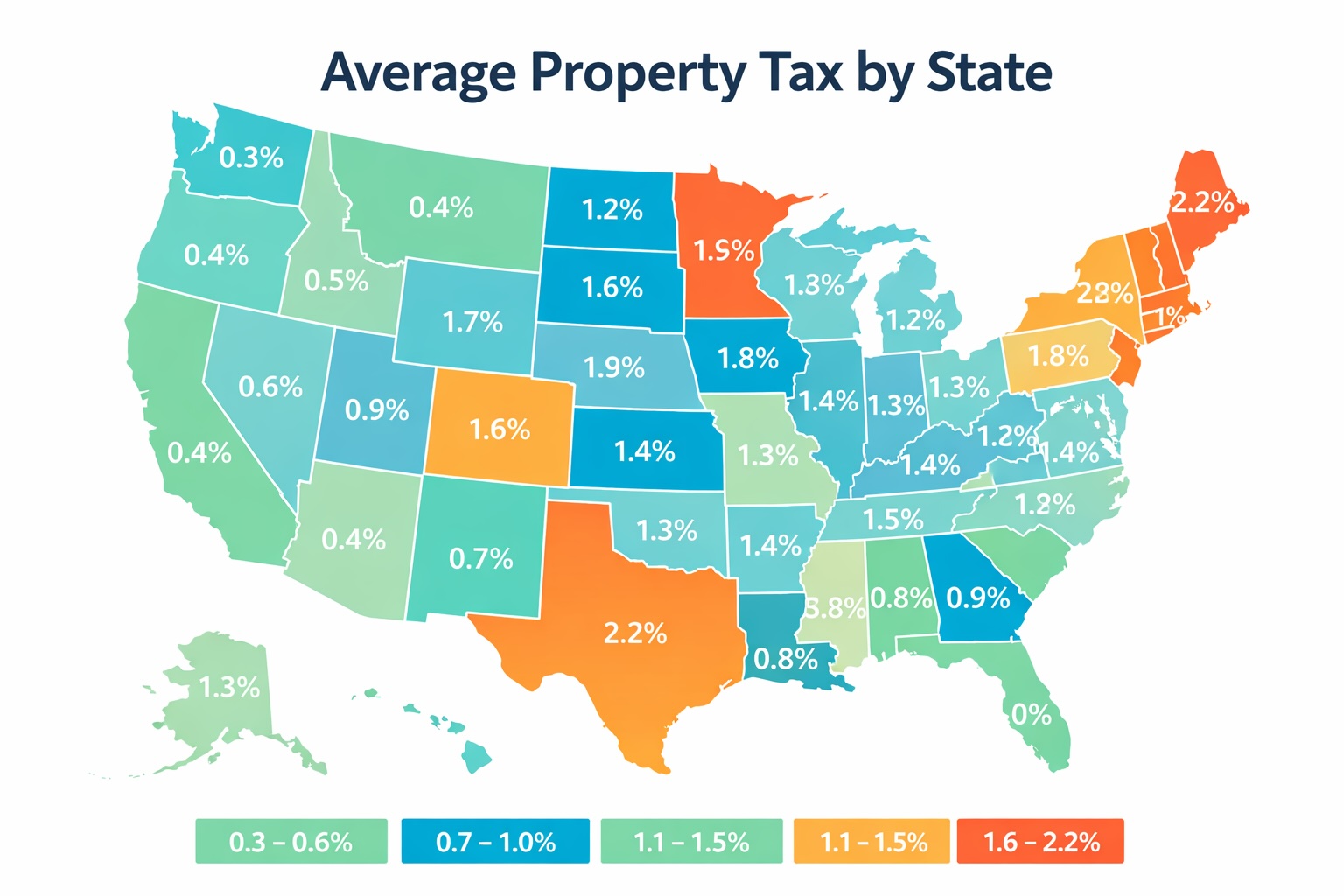
Average Property Tax by State
Here is an overview of typical property tax rates across the United States.
| State | Avg Property Tax Rate |
|---|---|
| New Jersey | 2.2% |
| Illinois | 2.1% |
| Texas | 1.8% |
| New Hampshire | 1.7% |
| Vermont | 1.6% |
| Wisconsin | 1.6% |
| Nebraska | 1.6% |
| Pennsylvania | 1.5% |
| Ohio | 1.4% |
| Michigan | 1.3% |
| Florida | 0.9% |
| Georgia | 0.9% |
| North Carolina | 0.8% |
| Arizona | 0.7% |
| Nevada | 0.6% |
| Alabama | 0.4% |
| Hawaii | 0.3% |
States like New Jersey and Illinois consistently rank among the highest property tax states, while Hawaii and Alabama have some of the lowest property taxes in the country.
States With the Highest Property Taxes
These states typically have the highest property tax burdens:
| State | Typical Annual Tax on $350k Home |
|---|---|
| New Jersey | ~$7,700 |
| Illinois | ~$7,350 |
| Texas | ~$6,300 |
| New Hampshire | ~$5,950 |
High property taxes are often associated with strong public school systems and local services funded by property tax revenue.
States With the Lowest Property Taxes
Some states have significantly lower property tax rates.
| State | Typical Annual Tax on $350k Home |
|---|---|
| Hawaii | ~$1,050 |
| Alabama | ~$1,400 |
| Nevada | ~$2,100 |
| Arizona | ~$2,450 |
However, lower property taxes do not always mean lower overall living costs.
Some states compensate with higher income or sales taxes.
Property Taxes vs Other Housing Costs
Property taxes represent an important part of homeownership expenses.
Example monthly housing budget:
| Housing Expense | Monthly Cost |
|---|---|
| Mortgage payment | $2,000 |
| Property tax | $350 |
| Home insurance | $150 |
| Utilities | $250 |
Total housing cost:
$2,750 per month
Related articles:
- Average Rent in the U.S. Per Month
- Average Utility Costs in the U.S.
- Average Monthly Budget for a Family of 4
Why Property Taxes Vary by State
Several factors influence property tax levels.
Local government funding
Property taxes fund local services such as schools, roads, and emergency services.
Property values
States with higher property values often collect more tax revenue.
Local tax policies
Some states rely heavily on property taxes, while others depend more on income or sales taxes.
How Property Taxes Are Calculated
Property tax is usually calculated using this formula:
Property tax = home value × tax rate
Example:
| Home Value | Tax Rate | Annual Property Tax |
|---|---|---|
| $300,000 | 1.2% | $3,600 |
Many counties reassess property values periodically, which can increase taxes over time.
FAQ
Which state has the highest property tax?
New Jersey consistently ranks as the state with the highest average property tax rates in the United States.
Which state has the lowest property tax?
Hawaii generally has the lowest property tax rates.
Do property taxes vary within states?
Yes. Property taxes are typically set at the local level, so taxes can vary significantly between counties or cities.
Are property taxes included in mortgage payments?
Many homeowners pay property taxes through an escrow account included in their monthly mortgage payment.
Conclusion
Property taxes are a critical part of the cost of owning a home in the United States. While the national average property tax rate sits around 1%, the amount homeowners pay varies significantly depending on location.
Understanding these differences helps buyers make better financial decisions when choosing where to live.